A trench is only one phase in the public life of archaeology. After soil is removed, a find may be numbered, cleaned, stabilised, compared, stored, published, digitised or selected for an exhibition. Architecture may be conserved in place while smaller material moves to a repository. Years can separate discovery from interpretation, and a label may change as new evidence challenges an old reading.
Jerusalem makes this chain unusually visible. A citadel contains excavated structures beneath museum galleries; the Israel Antiquities Authority is previewing a national campus through controlled tours; the Israel Museum frames a manuscript as an archaeological object; the Rockefeller Museum preserves an older model of archaeological display even while its current visitor status is difficult to establish.
At a glance
Start here
- Excavation removes context, so recording is as important as discovery.
- Conservation and storage are active parts of archaeological knowledge.
- Museums select and frame evidence rather than reproducing a trench.
- A historic museum building is not proof of current public access.
01
Context leaves the ground only once
An object gains archaeological meaning from its relation to soil layers, structures and nearby material. Excavation is therefore destructive even when conducted carefully: once a layer is removed, no one can put its exact relationships back. Plans, photographs, measurements, samples and field notes become part of the evidence. The spectacular find and the apparently ordinary pottery fragment may depend on the same recording system.
The Tower of David illustrates why sequence matters. Its institutional history describes fortification and occupation evidence across many periods in one citadel complex. A visitor sees selected walls and objects together, but archaeologists had to distinguish phases before a gallery could narrate them. The museum timeline is an interpretation built from context, not the site simply speaking for itself.
Sources: Tower of David Jerusalem Museum02
The Kishle works like a vertical cross-section
South of the citadel, the Kishle occupies a former military compound and prison. The Tower of David says the Israel Antiquities Authority conducted extensive excavation there in 1999 and describes remains and traces spanning from early periods through British Mandate prison graffiti. Its old event page combines masonry, dyeing installations and marks made by prisoners in one guided narrative.
But the same museum's about page said renovation would begin in 2025 and the site would close temporarily. That makes the Kishle valuable for understanding layered interpretation but unsuitable as a promised 2026 visit. A past tour page is evidence that a route existed, not that tickets exist now. Confirm directly with the museum and accept that conservation may keep the space closed.
Sources: Tower of David Jerusalem Museum; Tower of David Jerusalem Museum03
The archaeology campus begins after excavation
The National Campus for the Archaeology of Israel shifts attention from a single dig to the systems around many digs. Its current Israel Antiquities Authority page describes an early preview before completion of a larger visitor centre. Entry requires advance registration, a guide and movement only through designated visitor areas, reflecting that this is an institutional workplace rather than an unrestricted attraction.
That controlled route can prompt better questions. How are objects identified and stored? Which materials need immediate treatment? Who decides whether a fragment is studied, loaned or displayed? What documentation remains connected to it? A visitor should not expect access to every lab or repository. The boundary between public and working space protects collections and staff, and it reveals that archaeology continues long after fieldwork.
Sources: Israel Antiquities Authority04
Conservation controls what can be seen
The Israel Museum's 2026 Great Isaiah Scroll exhibition calls the manuscript an archaeological object and makes its materiality a curatorial theme. Full display is limited in duration, while entry to the room is restricted to a selected ten-minute slot because of preservation requirements. The limit is not separate from the archaeology story; it is what happens when vulnerable excavated material enters long-term stewardship.
Objects can rest off display, rotate with related pieces or appear through digital surrogates. That means absence from a gallery is not evidence of neglect, just as visibility is not proof that every scholarly question is settled. Ask what support, light, humidity or mounting a material requires. An exhibition is a negotiated moment between access and the obligation to keep the object stable.
Sources: The Israel Museum, Jerusalem05
A gallery turns evidence into an argument
Museums choose a beginning, arrange objects, compress centuries and write labels in a limited space. The Tower of David uses ten galleries and the citadel itself to narrate Jerusalem across religions and periods. The Israel Museum's scroll exhibition isolates one extraordinary object and a preservation-controlled encounter. Neither is a transparent container; each constructs a different scale and sequence for understanding evidence.
Read labels with two columns in mind. The first is evidence: material, find context, date range and named source. The second is interpretation: what the curator says the evidence means and which larger story it serves. Where a label attributes a conclusion to a particular excavator, retain the attribution. Jerusalem archaeology is contested enough that removing qualifiers can transform responsible interpretation into false certainty.
Sources: Tower of David Jerusalem Museum; The Israel Museum, Jerusalem06
The Rockefeller Museum is also an exhibit
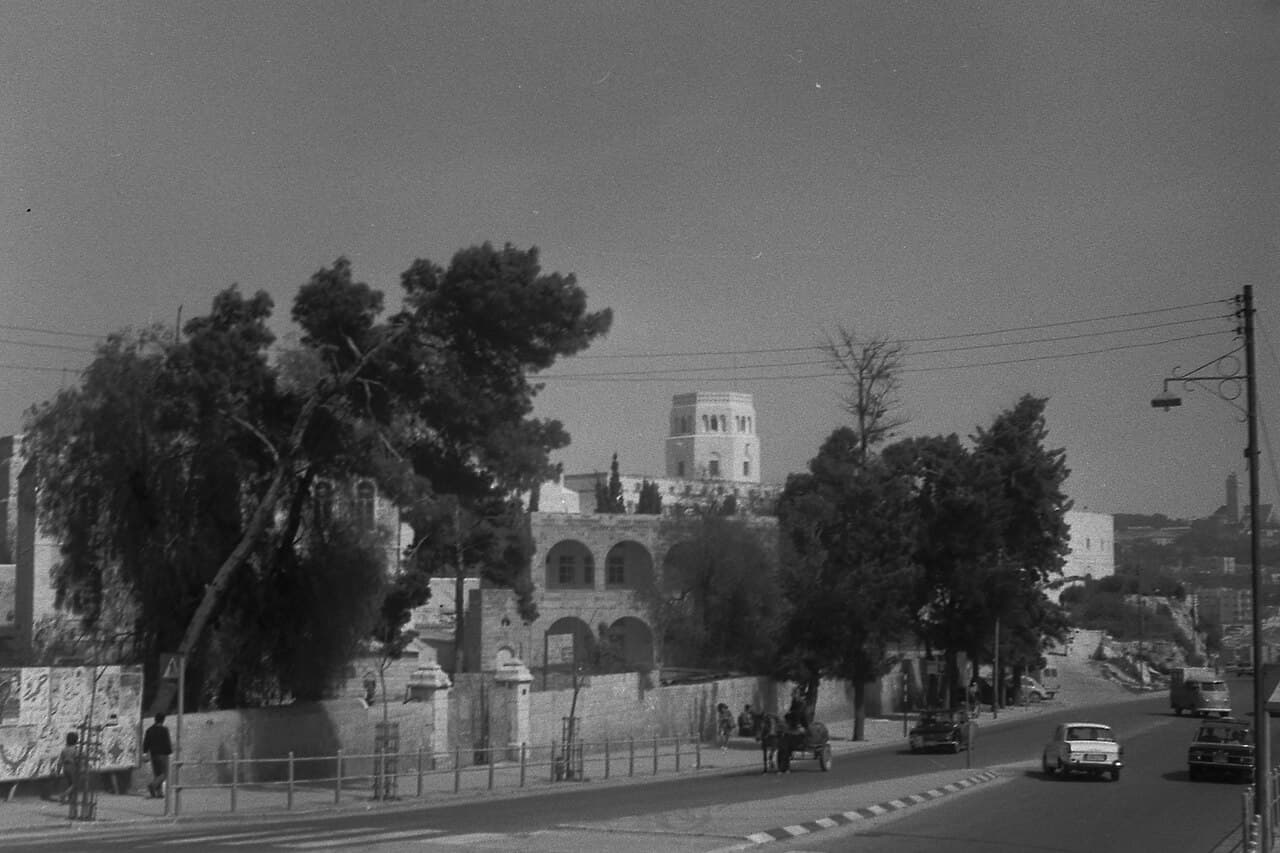
An Israel Museum exhibition page about the Rockefeller Museum credits architect Austen St Barbe Harrison and describes a 1930s design negotiating eastern and western architectural vocabularies. The building therefore records an earlier institutional idea of how archaeology should be ordered and presented. Courtyard, material and gallery sequence can be studied as part of the history of the discipline, not merely as a backdrop for objects.
Current public access could not be verified from a live official visitor page on 14 September 2026. Older institutional material and search traces are not enough to declare it open, and the Israel Museum's general visitor page rendered as an empty shell. Do not plan entry unless the museum confirms it for the date. The accompanying site photograph is an honest exterior reference only, not evidence of access.
Sources: The Israel Museum, Jerusalem; The Israel Museum, Jerusalem07
Follow the chain instead of chasing a find
Build an archaeology day around stages. At the citadel, consider an excavated structure in place. At a guided campus visit, focus on documentation, conservation and storage. At a museum, examine how one object is selected and framed. If the Rockefeller Museum is officially confirmed open, add the building as evidence of an older display system; if not, leave it out without substituting an unofficial entry claim.
Carry one question through the sequence: what information was lost, preserved, added or withheld at this stage? Check all access live, respect barriers and never remove material from a site. A shard without context is not a souvenir but damaged evidence. The deepest lesson after the dig is that archaeology depends less on possession than on maintaining relationships among objects, records, places and responsible custodians.
Sources: Tower of David Jerusalem Museum; Israel Antiquities Authority; The Israel Museum, Jerusalem; The Israel Museum, JerusalemUseful answers
Reader questions
Can I visit the Kishle excavations now?
Do not assume so. The Tower of David's historical tour page describes the site, but its about page said renovation would begin in 2025 with temporary closure. Confirm the 2026 status directly; this article does not promise access.
Sources: Tower of David Jerusalem Museum; Tower of David Jerusalem MuseumIs the archaeology campus a walk-in museum?
No. The current Israel Antiquities Authority page calls the opening an early preview and requires booking ahead, guided accompaniment and staying within its visitor-designated areas. Select a current tour in the right language.
Sources: Israel Antiquities AuthorityWhy are important archaeological objects sometimes absent?
Conservation, research, rotation and loans can limit display. The Great Isaiah Scroll's current room uses timed ten-minute access specifically for preservation, showing that controlled visibility can be part of responsible stewardship.
Sources: The Israel Museum, JerusalemIs the Rockefeller Museum open to visitors?
No current official page yielded a verifiable admission status during the 14 September 2026 review. An older museum architecture page establishes the building's history, not today's entry conditions. Ask the Israel Museum directly before making a journey.
Sources: The Israel Museum, Jerusalem; The Israel Museum, JerusalemRead the evidence
Sources and further reading
These sources support the relevant sections above. Plans and comparisons are editorial suggestions. Check operators for current arrangements.
- About the Museum ↗Tower of David Jerusalem Museum · Accessed 14 September 2026
Citadel archaeology, multi-period institutional narrative, ten-gallery framing and planned Kishle closure.
- Herod's Palace and the Kishle ↗Tower of David Jerusalem Museum · Accessed 14 September 2026
1999 IAA excavation, former compound and prison, multi-period remains and past tour framing; event date is not current.
- Tours at the National Campus for the Archaeology of Israel ↗Israel Antiquities Authority · Accessed 14 September 2026
Early-preview status, advance registration, guided access and designated visitor areas.
- A Voice from the Desert: The Great Isaiah Scroll ↗The Israel Museum, Jerusalem · Accessed 14 September 2026
Archaeological-object framing, materiality, temporary full display and preservation-controlled entry.
- West Meets East ↗The Israel Museum, Jerusalem · Accessed 14 September 2026
Rockefeller Museum architect, 1930s design and east-west architectural framing; the exhibition page does not establish current access.
- Visitor information ↗The Israel Museum, Jerusalem · Accessed 14 September 2026
Exact official visitor URL and empty JavaScript response observed during current access research.