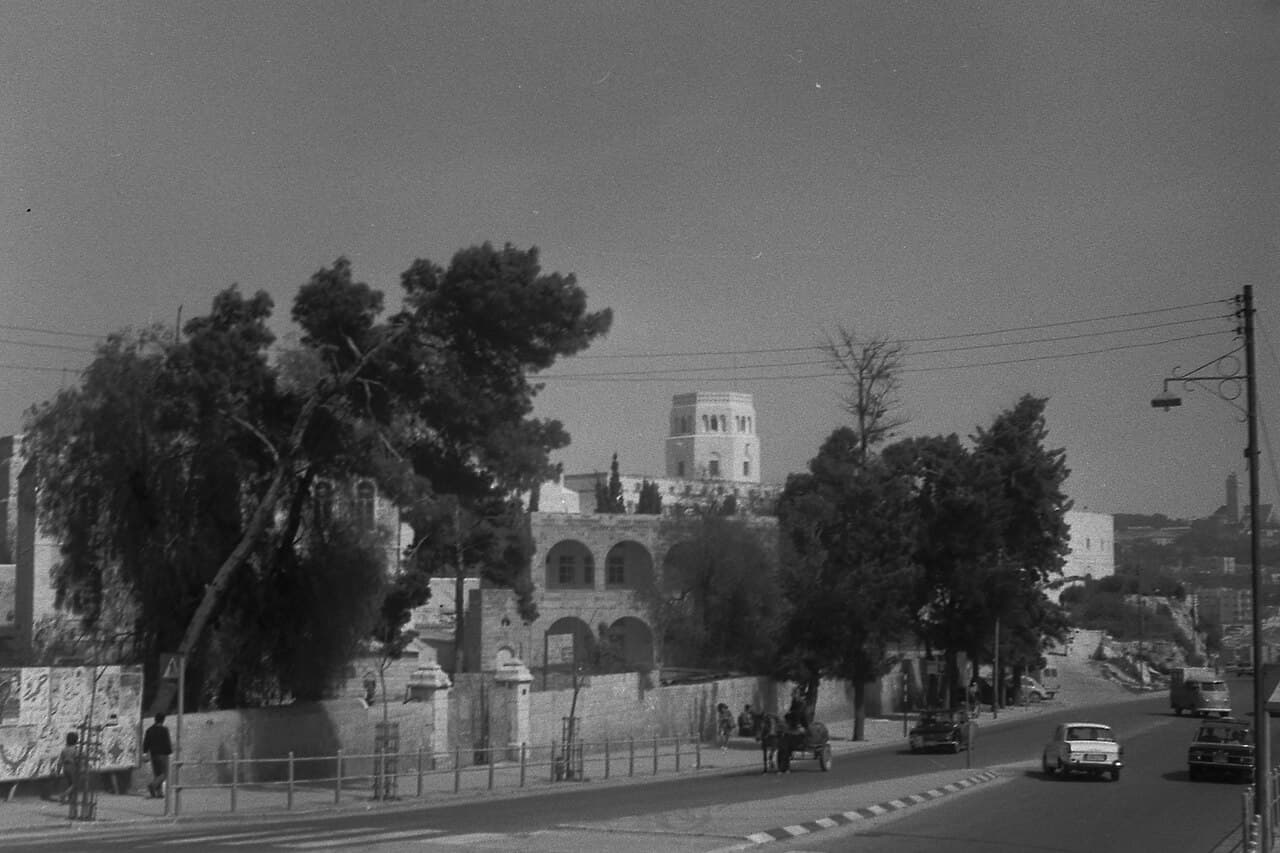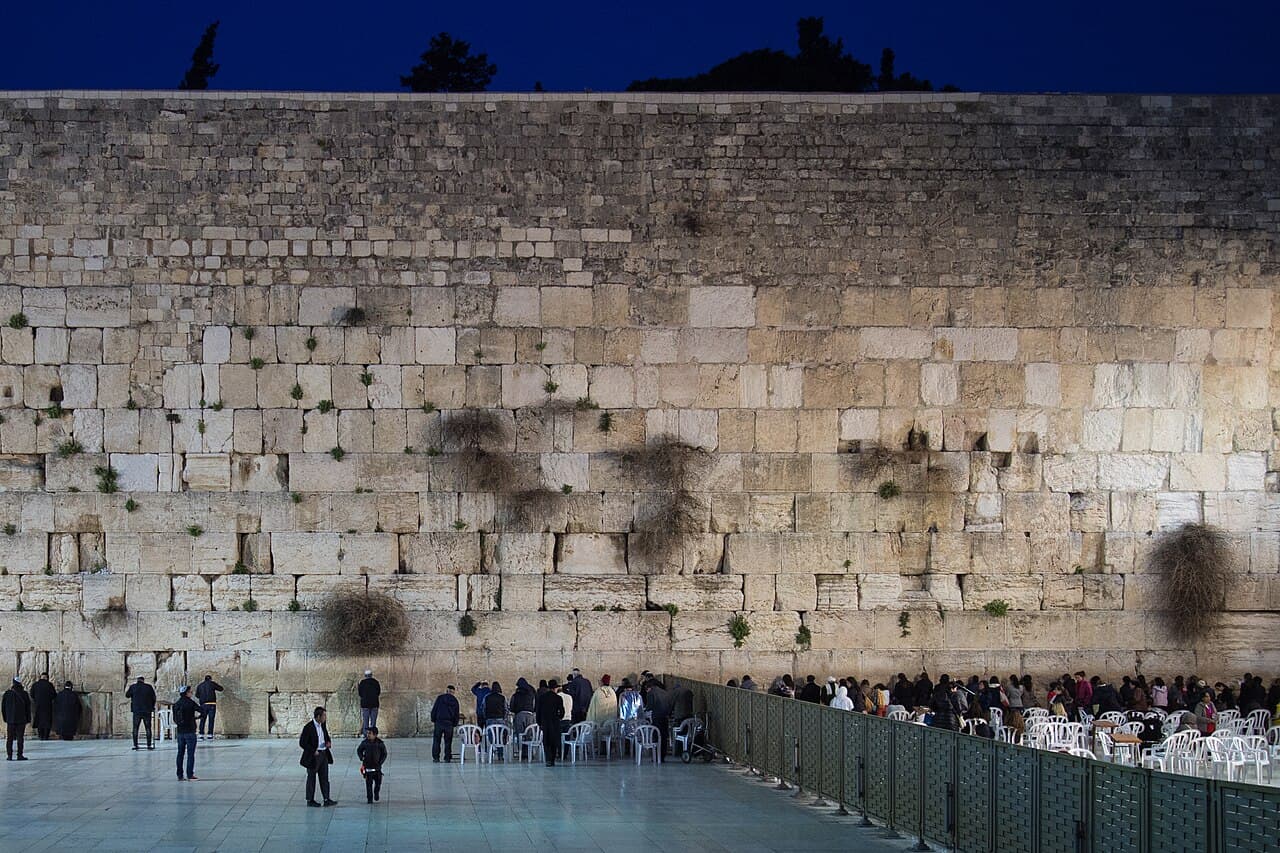
Jerusalem's walls look definitive from a distance. Their crenellations give the Old City a single outline, photographs turn gates into neat labels, and maps suggest a clean moment of entry. Up close, that apparent certainty dissolves. Fortifications have been built, repaired, repurposed and interpreted by successive authorities, while today's gates remain working passages shaped by worship, commerce, policing and ordinary movement.
To read the walls well is to hold structure and status apart. The standing Ottoman circuit is not the same thing as every ancient wall found around Jerusalem, a national park carrying the word walls does not contain the ramparts, and heritage inscription does not settle sovereignty. The result is less tidy than a postcard and far more useful.
At a glance
Start here
- The visible circuit is largely an Ottoman rebuilding, not a single ancient wall.
- Gates are active thresholds whose meaning changes with approach and use.
- UNESCO records heritage significance while using careful status language.
- Current access must be checked independently of historical interpretation.
01
A clear outline is not a single origin story
The Tower of David's account places the rebuilding of the walls around the Old City in the Ottoman period. Its separate walls-tour page attributes the standing work to Sultan Suleiman the Magnificent in the sixteenth century and invites attention to masonry, defensive strategy and style. Calling the circuit ancient without qualification hides that specific building campaign and collapses the much older settlement history beneath and beyond it.
The citadel makes the compression visible. According to the museum, its fabric includes remains and interventions associated with the First Temple, Hasmonean, Herodian, early Muslim, Crusader, Mamluk and Ottoman periods, followed by British, Jordanian and Israeli uses. A wall is therefore not a timestamp. It is a place where later builders keep, cover, dismantle or reinterpret what came before.
Sources: Tower of David Jerusalem Museum; Tower of David Jerusalem Museum02
Read a gate as a verb
A gate does more than stand. It admits, directs, filters, delays, frames and sometimes closes. Jaffa Gate links the citadel and routes west of the Old City; other gates orient movement toward neighbourhoods, roads, cemeteries and sacred places. The important observation is not a memorised list of names but what each threshold makes bodies do: climb, turn, queue, pass inspection, enter a market street or emerge into open ground.
That action changes by hour and circumstance. Current UK regional advice identifies demonstrations and incidents around Damascus, Herod's, Lion's and Chain Gates and says Old City entrances may receive additional checks or close. This operational fact should not be romanticised as another layer of tourist drama. If authorities close or control a passage, the responsible response is compliance and a changed plan.
Sources: UK Foreign, Commonwealth & Development Office; Tower of David Jerusalem Museum03
Notice the qualifiers in the heritage record
UNESCO inscribed the Old City of Jerusalem and its Walls in 1981 and has kept it on the List of World Heritage in Danger since 1982. Its description stresses Jerusalem's symbolic importance to Judaism, Christianity and Islam and counts 220 historic monuments. These facts establish international heritage recognition and continuing conservation concern; they do not turn the city into a politically neutral museum district.
The same UNESCO record labels Jerusalem as a site proposed by Jordan. Its documents page preserves current decisions under that wording. UNESCO's maps and naming conventions also carry disclaimers about legal status and boundaries. Good writing retains those institutional qualifiers instead of silently converting a heritage-list entry into a sovereignty claim. The walls contain monuments, but the language used about them also has architecture.
Sources: UNESCO World Heritage Centre; UNESCO World Heritage Centre04
The national-park name sets a useful trap
The Israel Nature and Parks Authority page for Jerusalem Walls National Park explicitly says that the walls themselves and the Old City Walls promenade are not included in the park. Instead it describes a wider landscape with the City of David, Hinnom and Kidron valleys and sections of fortification from different periods. The mismatch between label and boundary is a reminder to inspect what an attraction name legally or operationally includes.
Its archaeology section distinguishes standing Ottoman ramparts from older wall segments in the City of David area, including Canaanite and Kingdom of Judah material. The page's visitor block also contradicts itself by listing Saturday hours and then saying the site is closed on Saturday. That inconsistency makes the historical content usable with care but the operational timetable unsuitable for reproduction.
Sources: Israel Nature and Parks Authority05
Height changes the story but not the facts
A rampart or citadel view makes the relation between enclosed streets and later development legible. The Tower of David describes its Phasael observation point as a panorama over old and new parts of Jerusalem, while its walls-tour page treats overlooks as a way to read building method and military logic. From above, gates become junctions and valleys become elements of defence rather than empty space between attractions.
Yet the elevated view is selective. Roofs hide interiors, walls obscure slopes, and a panorama can make living districts look like a unified model. Accessibility matters too: the museum says its physical Phasael deck is not step-free, though it provides a digital panorama. A meaningful reading of the skyline must not turn one privileged viewpoint into the complete city.
Sources: Tower of David Jerusalem Museum; Tower of David Jerusalem Museum06
Walk with three questions
At any visible stretch, ask three things. Which period does the institution responsible for this place assign to the masonry? What terrain or movement was the structure designed to manage? How is the threshold used today? The first guards against vague antiquity, the second restores function, and the third prevents the city from becoming a dead stage set. When a sign offers a contested interpretation, record who authored it.
Photograph details only where permitted and never photograph security personnel or installations. Look for blocked openings, changes in stone, reused elements, paths that bend before an entrance and modern equipment attached to old fabric. These observations are not a licence to declare an amateur date. They are prompts for checking a museum label, conservation document or archaeological publication later.
Sources: Tower of David Jerusalem Museum; Israel Nature and Parks Authority; UK Foreign, Commonwealth & Development Office07
Access is not a metaphor
It is tempting to finish an essay about gates by treating closure as symbolism. For residents and worshippers, however, a checkpoint, restriction or closed entrance is a material condition with unequal effects. The UK regional page notes particular constraints for West Bank residents and heightened limits around Ramadan. A visitor's inconvenience should not be presented as equivalent to those experiences.
Before any walls walk, check current government advice, weather, the responsible site's official notice and the gate required for the route. Do not promise that a rampart, sacred compound or alternative entrance will be open. If live conditions fail, read the walls from a lawful exterior viewpoint or through museum and heritage material. The argument remains visible even when the planned path does not.
Sources: UK Foreign, Commonwealth & Development Office; UNESCO World Heritage CentreUseful answers
Reader questions
Are Jerusalem's present Old City walls ancient?
They stand in a landscape with much older fortifications, but official Tower of David material attributes the visible Old City circuit to an Ottoman rebuilding under Sultan Suleiman in the sixteenth century. Specify which wall and period you mean.
Sources: Tower of David Jerusalem Museum; Tower of David Jerusalem MuseumIs the walls promenade part of Jerusalem Walls National Park?
No. The Israel Nature and Parks Authority page explicitly says the walls and Old City Walls promenade are not included in that national park. Its own hours block is contradictory, so verify any visit with the responsible operator.
Sources: Israel Nature and Parks AuthorityDoes UNESCO's listing decide Jerusalem's political status?
No. UNESCO records the property as a site proposed by Jordan and uses disclaimers concerning legal status and boundaries. Cite the inscription and conservation status precisely without presenting them as a sovereignty determination.
Sources: UNESCO World Heritage Centre; UNESCO World Heritage CentreCan I count on using a particular Old City gate?
No. Current official advice says entrances can face extra checks or closure and identifies several gate areas where incidents have occurred. Check conditions that day, follow instructions and abandon the route instead of forcing an alternative.
Sources: UK Foreign, Commonwealth & Development OfficeRead the evidence
Sources and further reading
These sources support the relevant sections above. Plans and comparisons are editorial suggestions. Check operators for current arrangements.
- Old City of Jerusalem and its Walls ↗UNESCO World Heritage Centre · Accessed 14 September 2026
Inscription, World Heritage in Danger status, institutional naming and multi-faith significance.
- Old City of Jerusalem and its Walls: Documents ↗UNESCO World Heritage Centre · Accessed 14 September 2026
Current decision record, site-proposed-by-Jordan wording and legal-status caution.
- On the Walls of the Old City ↗Tower of David Jerusalem Museum · Accessed 14 September 2026
Suleiman-era wall construction, masonry and defensive interpretation; event details are undated and not used operationally.
- About the Museum ↗Tower of David Jerusalem Museum · Accessed 14 September 2026
Citadel chronology, Ottoman rebuilding, observation context and physical access limit.
- Jerusalem Walls National Park ↗Israel Nature and Parks Authority · Accessed 14 September 2026
Park boundary, older fortification layers and contradictory operational hours.
- Regional risks: Israel travel advice ↗UK Foreign, Commonwealth & Development Office · Accessed 14 September 2026
Current Old City gate incidents, possible checks or closures and unequal access constraints.